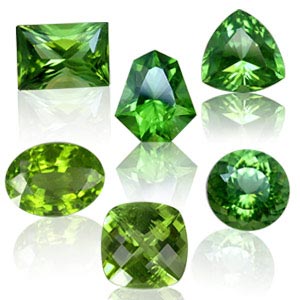
Gemstones : Diamond Diamond Jewelry Diamonds are beautiful symbols of love around the world. Diamonds are beautiful symbols of love around the world. Stone's names: Diamond, Brilliant.
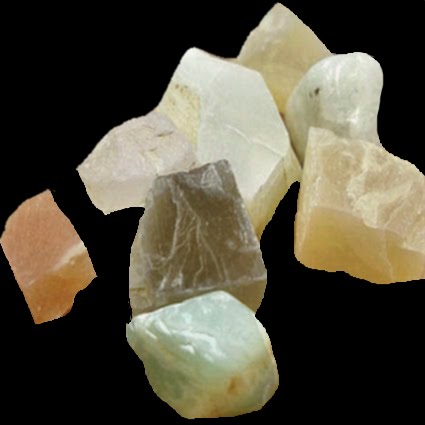
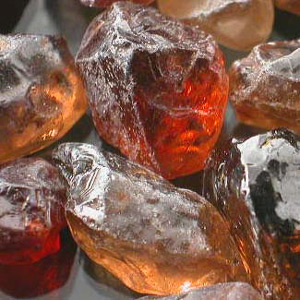
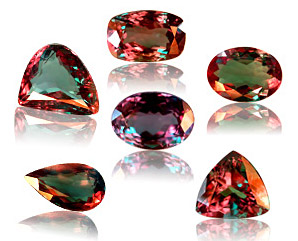
Color: Diamonds are usually colorless. However, brown, yellow, green, blue, purple, pink, red, gray and black variations are also found depending on the impurities present.
Description: C Native carbon Diamond is a mineral composed of pure carbon. It is difficult to accept that chemically this brilliant gemstone is the same as black opaque graphite and even ordinary soot..jpg)
.jpg)
.gif) Diamond is the hardest natural substance, with a hardness of 10 on Mohs' scale, so it can be cut or polished only by an
Diamond is the hardest natural substance, with a hardness of 10 on Mohs' scale, so it can be cut or polished only by an.jpg) other diamond. It can be identified by its hardness and adamantine lustre. Despite its extreme
other diamond. It can be identified by its hardness and adamantine lustre. Despite its extreme .jpg) hardness diamond is brittle and at 4,289 degree C a diamond will completely burn up leaving nothing behind.Diamonds are the most popular gemstone of all time. Diamonds used for jewelry are graded on the basis of color from blue-white to yellow. Grading also is done on the basis of purity, which varies from perfectly clear, extremely pure stones to those with many impurities and flaws. Diamonds are said to be of the first water when very transparent, and of the second or third water as transparency decreases. Diamond stones are weighed in carats (1 carat = 200 milligrams) and in points (1 point = 0.01 carat).
hardness diamond is brittle and at 4,289 degree C a diamond will completely burn up leaving nothing behind.Diamonds are the most popular gemstone of all time. Diamonds used for jewelry are graded on the basis of color from blue-white to yellow. Grading also is done on the basis of purity, which varies from perfectly clear, extremely pure stones to those with many impurities and flaws. Diamonds are said to be of the first water when very transparent, and of the second or third water as transparency decreases. Diamond stones are weighed in carats (1 carat = 200 milligrams) and in points (1 point = 0.01 carat).
The hardness, brilliance, and sparkle of diamonds make them unsurpassed as gems.
The name's origin: Diamond derives its name from the Greek word adamas, which means "invincible".
Birthstone: Diamond is the birthstone of Aries (Ram): March 21 - April 19.
Wedding anniversary: Diamond is the anniversary gemstone for the 30th and 60th year of marriage.
Care and treatment: Diamonds should be stored separately. They can scratch other jewelry as well as each other.
From the stone history: Diamonds from Indian deposits were known in ancient times. In the West the limited use of diamonds began in the late Middle Ages. The diamond, was thought to give its wearer strength in battle and to protect him against ghosts and magic.The first river-bed diamonds were probably discovered around 800 B.C.
Large demand provided an incentive for the production of false diamonds as early as 1675 in Paris.
Only 20 per cent of diamonds are suitable for cutting as gems. The rest are discolored or contain flaws. Because of their extreme hardness, diamonds have a number of important industrial applications. They are used in drill bits, glass cutters, masonry saws for shaping building stone, and for cutting other diamonds.
Shopping guide: Diamonds are special gifts due to their glamour, rarity, durability and beauty. Diamonds are welcome gifts for all occasions. They are beautiful symbols of love around the world.
A diamond with proper proportions will send all light entering the diamond out of the top of the stone. This is considered an ideal cut and what you should be looking for.
If you want a nice diamond be prepared to pay a nice price. Low price means low quality.
Be aware of numerous imitations of diamonds: cubic zirconia, synthetic moissianite, synthetic rutile, strontium titanate, colorless topaz, colorless sapphire, and many others. Scratching glass is useless test as many imitations made of quartz , which also scratches glass. Consult a professional, independent retail jeweler to insure you are getting the real thing.
If you are making a large investment in a diamond make sure that you are getting a diamond grading report from a reputable gemological laboratory.
Healing ability: Diamond is a great assistance for all brain diseases. It is beneficial in stomach area. Diamonds strengthen the owner's memory.
Mystical power: Diamonds give faith, purity, life, joy, innocence and repentance. They assist in developing concentration and in beeing straight-forward and honest. It is believed the diamond loses its brilliance with the health of the wearer, regaining it only when the owner recovers.
Diamond is an antidote to poison and is capable of detecting poison by exhibiting a moisture or perspiration on its surface. Supposedly, the higher quality the diamond, the better it supports these qualities.
Deposits: Diamonds are mostly found in Australia, Ghana, Zaire, Russia, USA (Arkansas, California, Colorado, and North Carolina), and Brazil.
Famous diamonds:
Jubilee diamond, flawless, clear white diamond weighing almost 651 carats in rough form, it was found in the Jaegersfontein mine in South Africa in 1895. It was faceted into a cushion brilliant of about 245 carats in 1897, the year of Queen Victoria's Diamond Jubilee, from which it takes its name. Excelsior diamond, until the discovery of the
Cullinan diamond in 1905, the world's largest-known uncut diamond. When found by a worker loading a truck in the De Beers mine at Jagersfontein, Orange Free State, on June 30, 1893, the blue-white stone weighed about 995 carats. After long study the Excelsior diamond was cut (1904) by I.J. Asscher and Company of Amsterdam into 21 stones ranging in weight from less than 1 carat to more than 70 carats.
Cullinan diamond, world's largest gem diamond, which weighed about 3,106 carats in rough form when found in 1905 at the Premier mine in Transvaal, S.Af. Named for Sir Thomas Cullinan, who had discovered the mine three years earlier, the colorless stone was purchased by the Transvaal government and was presented (1907) to the reigning British monarch, King Edward VII. It was cut into 9 large stones and about 100 smaller ones by I.J. Asscher and Company of Amsterdam.
Excelsior diamond, which until the discovery of the Cullinan had been the largest known diamond. The stones cut from the Cullinan diamond, all flawless, are now part of the British regalia. The two largest are the largest cut diamonds known, and the larger of these is the Great Star of Africa, or Cullinan I, a 530.2-carat, pear-shaped gem set in the English sceptre. The other is the most valuable stone in the imperial state crown, the 317-carat Cullinan II, sometimes called the Second Star of Africa.
Hope diamond, sapphire-blue gemstone from India, one of the largest blue diamonds known. It is thought to have been cut from a 112-carat stone brought to France by the jewel trader Jean-Baptiste Tavernier and purchased by Louis XIV in 1668 as part of the French crown jewels. This stone, later called the French Blue, was recut into a 67-carat heart in 1673 and disappeared after the crown-jewel robbery of 1792. The 45.5-carat Hope diamond, named for the London banker Thomas Hope, who purchased it in 1830, was apparently formed from it. The Hope diamond is on display in the Smithsonian Institution, Washington, D.C.
Regent diamond, also called PITT DIAMOND, a brilliant-cut stone with a slight blue tinge that once was the outstanding gem of the French crown jewels; it was discovered in India in 1701 and weighed 410 carats in rough form. It was purchased by Sir Thomas Pitt, British governor in Madras, who published a letter in the London Daily Post to counter rumours that he had stolen the gem. The stone was cut to a 141-carat cushion brilliant called the Pitt diamond and was purchased in 1717 by the Duke of Orleans, regent of France--hence its present name. In 1792 it was stolen along with other crown jewels but was recovered. Napoleon I wore the stone in the pommel of his sword. It has been on display in the Louvre since 1887.
Great Mogul diamond, the largest diamond ever found in India. It was discovered as a 787-carat rough stone in the Golconda mines in 1650 and subsequently was cut by the Venetian lapidary Hortentio Borgis. The French jewel trader Jean-Baptiste Tavernier described it in 1665 as a high-crowned rose-cut stone with a flaw at the bottom and a small speck within. Its present location is unknown, and some believe that either the Orlov diamond or the Koh-i-noor may have been cut from this stone after its loss following the assassination of its owner, Nader Shah, in 1747.
Shah diamond, yellow-tinged stone of about 89 carats that bears three ancient Persian inscriptions, indicating it was discovered before 1591, probably in the Golconda mines in India. The inscriptions are to Nezam Shah Borhan II, 1591; Shah Jahan, son of Shah Jahangir, 1641; and Fath 'Ali Shah, 1826. Given to Tsar Nicholas I by Fath 'Ali Shah in 1829, it is displayed in the Diamond Fund of Russia in Moscow.
Orlov diamond, rose- cut gem from India, one of the Romanov crown jewels; it is shaped like half an egg, with facets covering its domed surface, and the underside is nearly flat. It weighs nearly 200 carats. According to legend, it was once used as the eye of an idol in a Brahman temple in Mysore and was stolen by a French deserter, who escaped with it to Madras. Others contend that the authenticated history of the Orlov extends to the middle of the 18th century, when the stone (believed to be the long-missing Great Mogul diamond) belonged to Nader Shah, king of Persia. After his assassination it was stolen and sold to an Armenian millionaire named Shaffrass. In either case, it was purchased in 1774 by Count Grigory Grigoryevich Orlov, who in an unsuccessful attempt to regain favour gave it to Empress Catherine II the Great. Catherine had it mounted in the Romanov imperial sceptre, and it is now part of Russia's Diamond Fund (which contains the tsarist regalia) in Moscow.
Sancy diamond, fiery stone of Indian origin that is shaped like a peach pit and weighs 55 carats. It has a long history and has passed through many royal families. Purchased in Constantinople about 1570 by Nicolas Harlay de Sancy, the French ambassador to Turkey, it was lent to the French kings Henry III and Henry IV. Later it was purchased by Queen Elizabeth I of England and descended to the Stuarts. After the flight of James II from England to France in 1688, it reappeared among the French crown jewels of Louis XIV and was stolen with these in 1792. It reappeared in 1828, when it was purchased by the Russian prince Demidov, in whose family it remained until 1900. Later it became the property of Lady Nancy Astor.
Florentine diamond, clear, pale-yellow stone weighing 137 carats; of Indian origin, it was cut as a double rose with 126 facets. Once owned by Charles the Bold, duke of Burgundy, who lost it when he fell in battle in 1477, the stone came into the possession of Pope Julius II and the Medici family early in the 16th century. Maria Theresa of Austria acquired it through her marriage (1736) to the Duke of Tuscany, and it subsequently became part of the Austrian crown jewels. Seized by the Germans when they took over Austria just before World War II, it was recovered by the U.S. 3rd Army and returned to the Viennese by Gen. Mark Clark.
Star of the South, unblemished, 129-carat white diamond with a rosy glow, one of the largest ever found in Brazil; it weighed about 262 carats in rough form. It was discovered in 1853 in the Bagagem River (in Minas Gerais state) by a slave woman, who was given her freedom and pensioned as a reward.
Color: Diamonds are usually colorless. However, brown, yellow, green, blue, purple, pink, red, gray and black variations are also found depending on the impurities present.
Description: C Native carbon Diamond is a mineral composed of pure carbon. It is difficult to accept that chemically this brilliant gemstone is the same as black opaque graphite and even ordinary soot.


 Diamond is the hardest natural substance, with a hardness of 10 on Mohs' scale, so it can be cut or polished only by an
 other diamond. It can be identified by its hardness and adamantine lustre. Despite its extreme
  hardness diamond is brittle and at 4,289 degree C a diamond will completely burn up leaving nothing behind.Diamonds are the most popular gemstone of all time. Diamonds used for jewelry are graded on the basis of color from blue-white to yellow. Grading also is done on the basis of purity, which varies from perfectly clear, extremely pure stones to those with many impurities and flaws. Diamonds are said to be of the first water when very transparent, and of the second or third water as transparency decreases. Diamond stones are weighed in carats (1 carat = 200 milligrams) and in points (1 point = 0.01 carat).
The hardness, brilliance, and sparkle of diamonds make them unsurpassed as gems.
The name's origin: Diamond derives its name from the Greek word adamas, which means "invincible".
Birthstone: Diamond is the birthstone of Aries (Ram): March 21 - April 19.
Wedding anniversary: Diamond is the anniversary gemstone for the 30th and 60th year of marriage.
Care and treatment: Diamonds should be stored separately. They can scratch other jewelry as well as each other.
From the stone history: Diamonds from Indian deposits were known in ancient times. In the West the limited use of diamonds began in the late Middle Ages. The diamond, was thought to give its wearer strength in battle and to protect him against ghosts and magic.The first river-bed diamonds were probably discovered around 800 B.C.
Large demand provided an incentive for the production of false diamonds as early as 1675 in Paris.
Only 20 per cent of diamonds are suitable for cutting as gems. The rest are discolored or contain flaws. Because of their extreme hardness, diamonds have a number of important industrial applications. They are used in drill bits, glass cutters, masonry saws for shaping building stone, and for cutting other diamonds.
Shopping guide: Diamonds are special gifts due to their glamour, rarity, durability and beauty. Diamonds are welcome gifts for all occasions. They are beautiful symbols of love around the world.
A diamond with proper proportions will send all light entering the diamond out of the top of the stone. This is considered an ideal cut and what you should be looking for.
If you want a nice diamond be prepared to pay a nice price. Low price means low quality.
Be aware of numerous imitations of diamonds: cubic zirconia, synthetic moissianite, synthetic rutile, strontium titanate, colorless topaz, colorless sapphire, and many others. Scratching glass is useless test as many imitations made of quartz , which also scratches glass. Consult a professional, independent retail jeweler to insure you are getting the real thing.
If you are making a large investment in a diamond make sure that you are getting a diamond grading report from a reputable gemological laboratory.
Healing ability: Diamond is a great assistance for all brain diseases. It is beneficial in stomach area. Diamonds strengthen the owner's memory.
Mystical power: Diamonds give faith, purity, life, joy, innocence and repentance. They assist in developing concentration and in beeing straight-forward and honest. It is believed the diamond loses its brilliance with the health of the wearer, regaining it only when the owner recovers.
Diamond is an antidote to poison and is capable of detecting poison by exhibiting a moisture or perspiration on its surface. Supposedly, the higher quality the diamond, the better it supports these qualities.
Deposits: Diamonds are mostly found in Australia, Ghana, Zaire, Russia, USA (Arkansas, California, Colorado, and North Carolina), and Brazil.
Famous diamonds:
Jubilee diamond, flawless, clear white diamond weighing almost 651 carats in rough form, it was found in the Jaegersfontein mine in South Africa in 1895. It was faceted into a cushion brilliant of about 245 carats in 1897, the year of Queen Victoria's Diamond Jubilee, from which it takes its name. Excelsior diamond, until the discovery of the
Cullinan diamond in 1905, the world's largest-known uncut diamond. When found by a worker loading a truck in the De Beers mine at Jagersfontein, Orange Free State, on June 30, 1893, the blue-white stone weighed about 995 carats. After long study the Excelsior diamond was cut (1904) by I.J. Asscher and Company of Amsterdam into 21 stones ranging in weight from less than 1 carat to more than 70 carats.
Cullinan diamond, world's largest gem diamond, which weighed about 3,106 carats in rough form when found in 1905 at the Premier mine in Transvaal, S.Af. Named for Sir Thomas Cullinan, who had discovered the mine three years earlier, the colorless stone was purchased by the Transvaal government and was presented (1907) to the reigning British monarch, King Edward VII. It was cut into 9 large stones and about 100 smaller ones by I.J. Asscher and Company of Amsterdam.
Excelsior diamond, which until the discovery of the Cullinan had been the largest known diamond. The stones cut from the Cullinan diamond, all flawless, are now part of the British regalia. The two largest are the largest cut diamonds known, and the larger of these is the Great Star of Africa, or Cullinan I, a 530.2-carat, pear-shaped gem set in the English sceptre. The other is the most valuable stone in the imperial state crown, the 317-carat Cullinan II, sometimes called the Second Star of Africa.
Hope diamond, sapphire-blue gemstone from India, one of the largest blue diamonds known. It is thought to have been cut from a 112-carat stone brought to France by the jewel trader Jean-Baptiste Tavernier and purchased by Louis XIV in 1668 as part of the French crown jewels. This stone, later called the French Blue, was recut into a 67-carat heart in 1673 and disappeared after the crown-jewel robbery of 1792. The 45.5-carat Hope diamond, named for the London banker Thomas Hope, who purchased it in 1830, was apparently formed from it. The Hope diamond is on display in the Smithsonian Institution, Washington, D.C.
Regent diamond, also called PITT DIAMOND, a brilliant-cut stone with a slight blue tinge that once was the outstanding gem of the French crown jewels; it was discovered in India in 1701 and weighed 410 carats in rough form. It was purchased by Sir Thomas Pitt, British governor in Madras, who published a letter in the London Daily Post to counter rumours that he had stolen the gem. The stone was cut to a 141-carat cushion brilliant called the Pitt diamond and was purchased in 1717 by the Duke of Orleans, regent of France--hence its present name. In 1792 it was stolen along with other crown jewels but was recovered. Napoleon I wore the stone in the pommel of his sword. It has been on display in the Louvre since 1887.
Great Mogul diamond, the largest diamond ever found in India. It was discovered as a 787-carat rough stone in the Golconda mines in 1650 and subsequently was cut by the Venetian lapidary Hortentio Borgis. The French jewel trader Jean-Baptiste Tavernier described it in 1665 as a high-crowned rose-cut stone with a flaw at the bottom and a small speck within. Its present location is unknown, and some believe that either the Orlov diamond or the Koh-i-noor may have been cut from this stone after its loss following the assassination of its owner, Nader Shah, in 1747.
Shah diamond, yellow-tinged stone of about 89 carats that bears three ancient Persian inscriptions, indicating it was discovered before 1591, probably in the Golconda mines in India. The inscriptions are to Nezam Shah Borhan II, 1591; Shah Jahan, son of Shah Jahangir, 1641; and Fath 'Ali Shah, 1826. Given to Tsar Nicholas I by Fath 'Ali Shah in 1829, it is displayed in the Diamond Fund of Russia in Moscow.
Orlov diamond, rose- cut gem from India, one of the Romanov crown jewels; it is shaped like half an egg, with facets covering its domed surface, and the underside is nearly flat. It weighs nearly 200 carats. According to legend, it was once used as the eye of an idol in a Brahman temple in Mysore and was stolen by a French deserter, who escaped with it to Madras. Others contend that the authenticated history of the Orlov extends to the middle of the 18th century, when the stone (believed to be the long-missing Great Mogul diamond) belonged to Nader Shah, king of Persia. After his assassination it was stolen and sold to an Armenian millionaire named Shaffrass. In either case, it was purchased in 1774 by Count Grigory Grigoryevich Orlov, who in an unsuccessful attempt to regain favour gave it to Empress Catherine II the Great. Catherine had it mounted in the Romanov imperial sceptre, and it is now part of Russia's Diamond Fund (which contains the tsarist regalia) in Moscow.
Sancy diamond, fiery stone of Indian origin that is shaped like a peach pit and weighs 55 carats. It has a long history and has passed through many royal families. Purchased in Constantinople about 1570 by Nicolas Harlay de Sancy, the French ambassador to Turkey, it was lent to the French kings Henry III and Henry IV. Later it was purchased by Queen Elizabeth I of England and descended to the Stuarts. After the flight of James II from England to France in 1688, it reappeared among the French crown jewels of Louis XIV and was stolen with these in 1792. It reappeared in 1828, when it was purchased by the Russian prince Demidov, in whose family it remained until 1900. Later it became the property of Lady Nancy Astor.
Florentine diamond, clear, pale-yellow stone weighing 137 carats; of Indian origin, it was cut as a double rose with 126 facets. Once owned by Charles the Bold, duke of Burgundy, who lost it when he fell in battle in 1477, the stone came into the possession of Pope Julius II and the Medici family early in the 16th century. Maria Theresa of Austria acquired it through her marriage (1736) to the Duke of Tuscany, and it subsequently became part of the Austrian crown jewels. Seized by the Germans when they took over Austria just before World War II, it was recovered by the U.S. 3rd Army and returned to the Viennese by Gen. Mark Clark.
Star of the South, unblemished, 129-carat white diamond with a rosy glow, one of the largest ever found in Brazil; it weighed about 262 carats in rough form. It was discovered in 1853 in the Bagagem River (in Minas Gerais state) by a slave woman, who was given her freedom and pensioned as a reward.